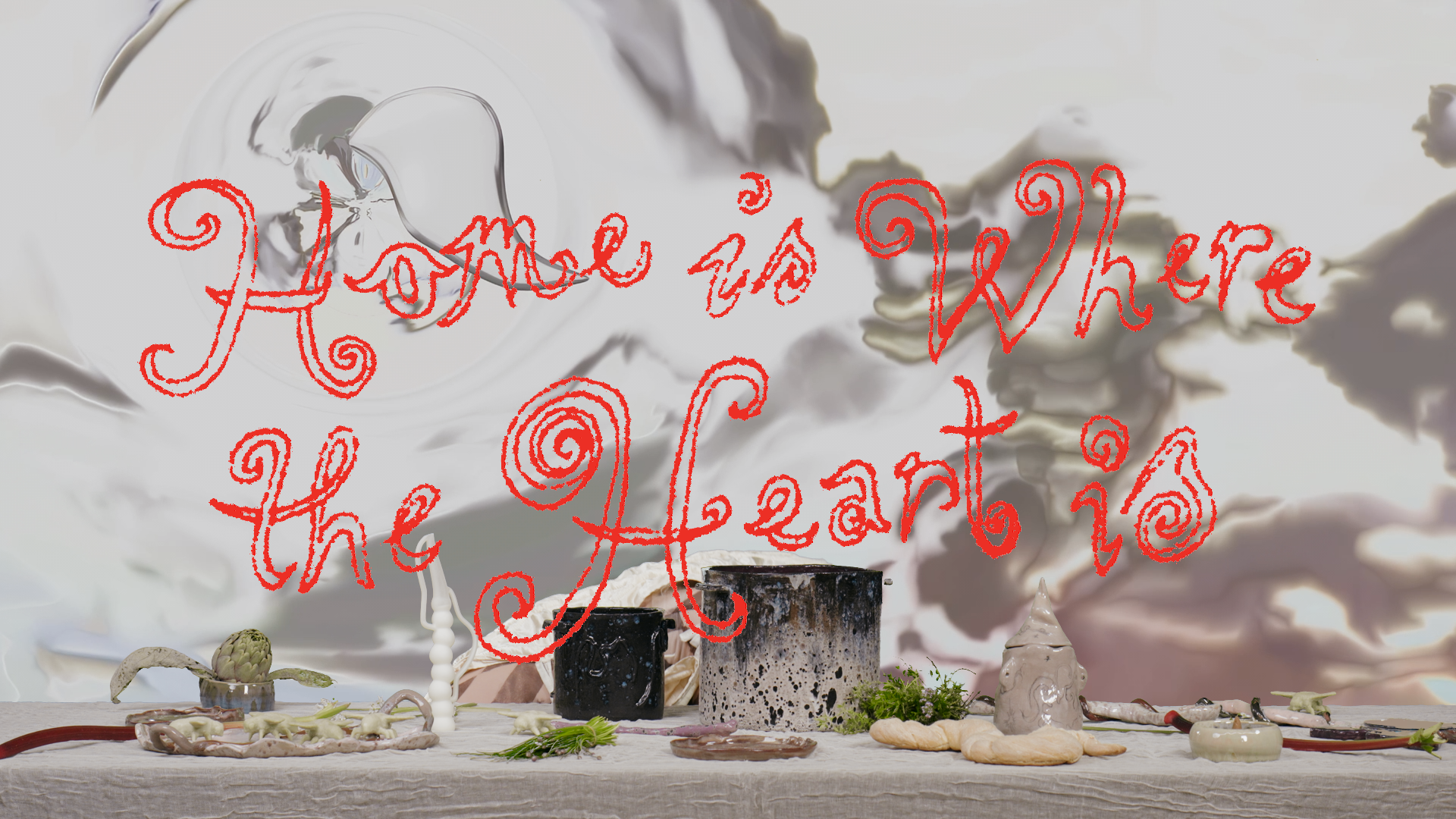
Home is Where the Heart is (a collective recipe)
An object slowly floating lands in the palm of my hands, merging with the gestures of care that circulate through a continuous cycle of exchange. As we cook, we remember the kinship we form through thinking together and allowing our stories to unfold in the presence of others. These gestures of sharing become acts of resistance, forming a world in which communities are not defined by labels but by mutual growth and trust. Let this polyphony of scents invite you to imagine the transformative potential within a simple exchange of recipes.
Home is Where the Heart brings together ten individuals who formed the first collective of The Kinship Cookbook, during its inaugural gathering Home Sweet Home. This event invited participants to reflect on the meaning of home as a site of intimacy, care, and transformation. Through collective reading and writing, a shared performance, and the creation of an ephemeral in situ installation composed of personal objects and offerings, the participants built a temporary home grounded in dialogue and reflection.
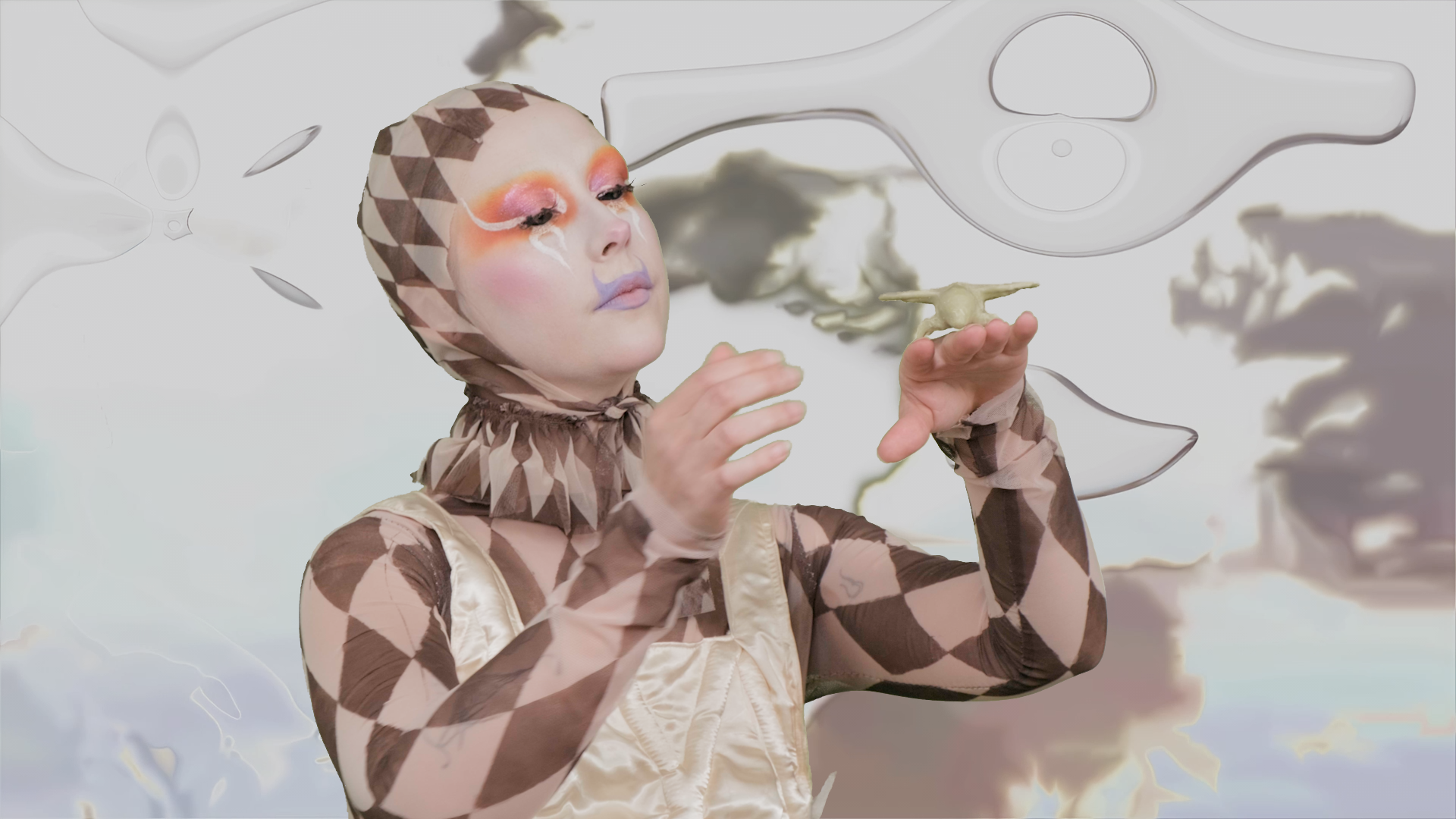
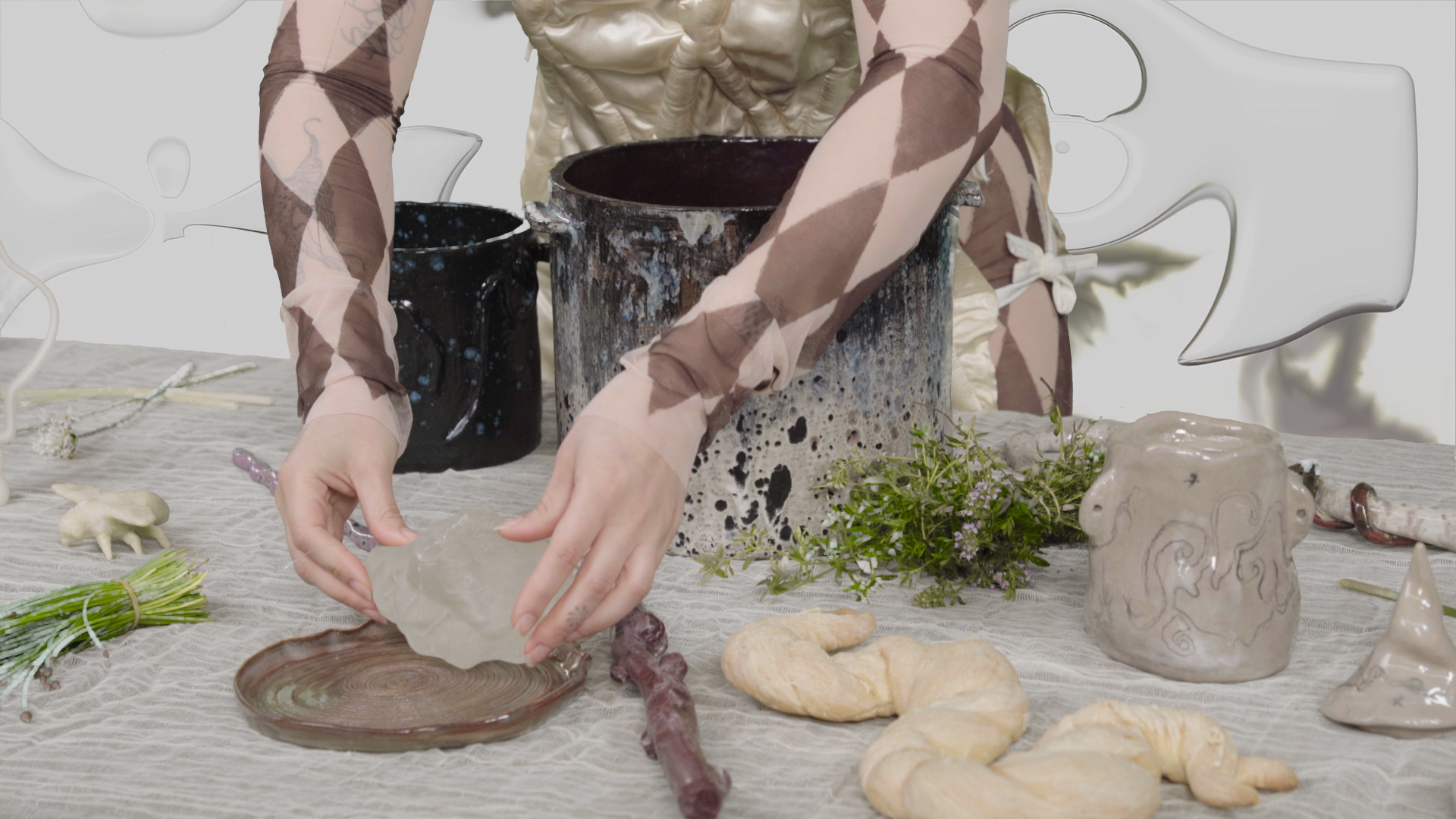
The recipes written during the gathering became vessels for memory and imagination, revealing the many ways care and vulnerability can take form. Activated later through performance, sculpture, and installation, these recipes continue to grow and transform, embodying the evolving nature of queer kinships and the interdependence of human and nonhuman beings. Together, they propose a practice of becoming with one another, rooted in kindness, curiosity, and collective reflection.
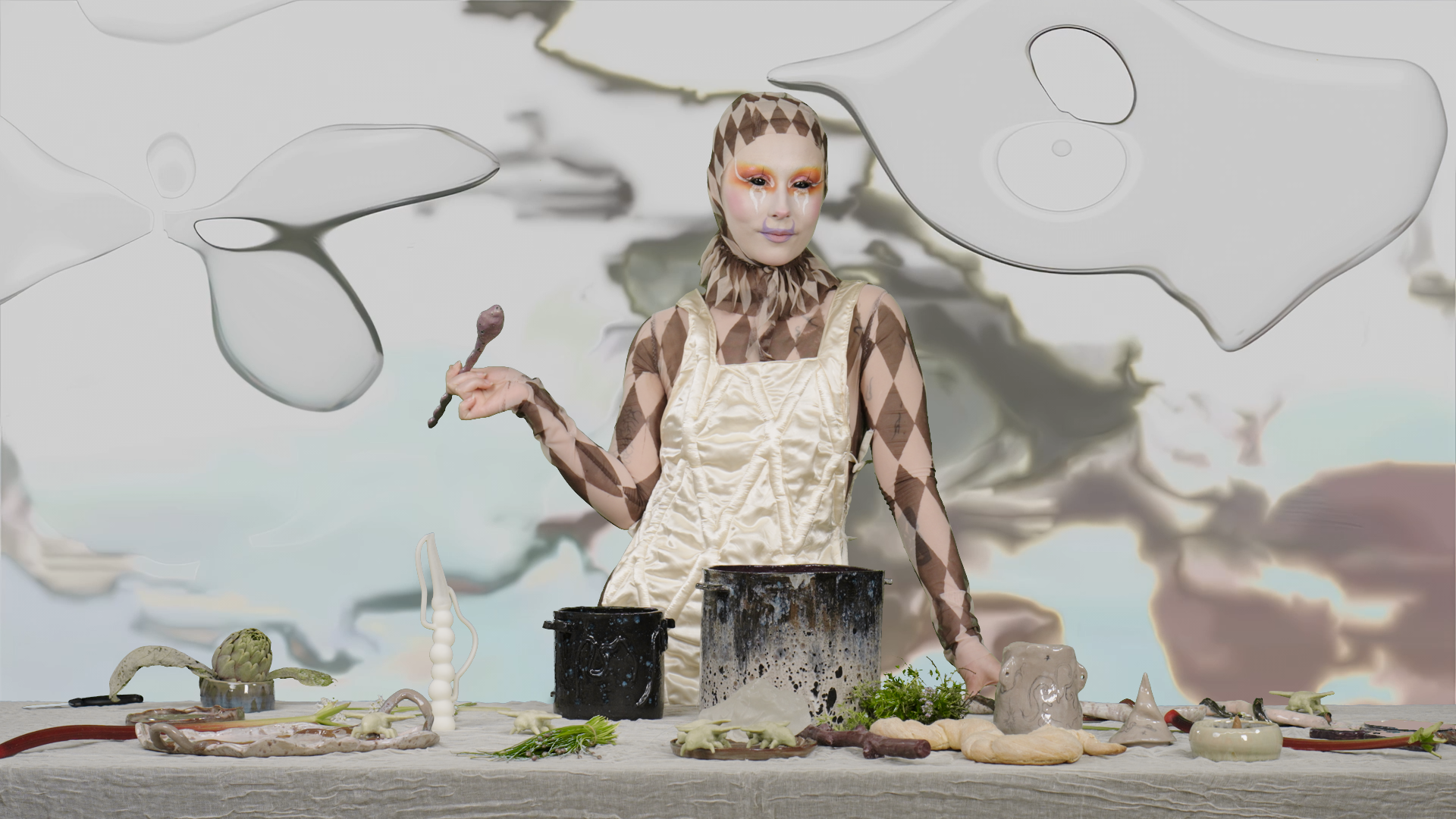
Costume
Aidan Abnet
Animation
Sjoerd Beijers
Camera & Edit
Isaac Ponseele
Benjamin Ponseele
Music
Benjamin Schoones
Typography
Seppe-Hazel Laereman
The Kinship Cookbook (ongoing)
The Kinship Cookbook is an ongoing proposition to gather, speculate, and share knowledge around the forming of inclusive infrastructures using recipes as a curatorial and artistic methodology. Emerging from the intersection of feminist and queer practices of care, it situates the act of recipe making as both a poetic and political gesture, a means to collectively imagine worlds grounded in empathy, reciprocity, and mutual becoming.
Rooted in gatherings that merge the domestic and the speculative, the project uses the format of the recipe as a vessel for storytelling, reflection, and coauthorship. Each gathering revolves around a theme that invites participants to contribute through personal narratives, performative gestures, and symbolic ingredients. Over time, these recipes accumulate into a living collective manifesto, a body of knowledge that grows organically through shared experience, conversation, and ritual.
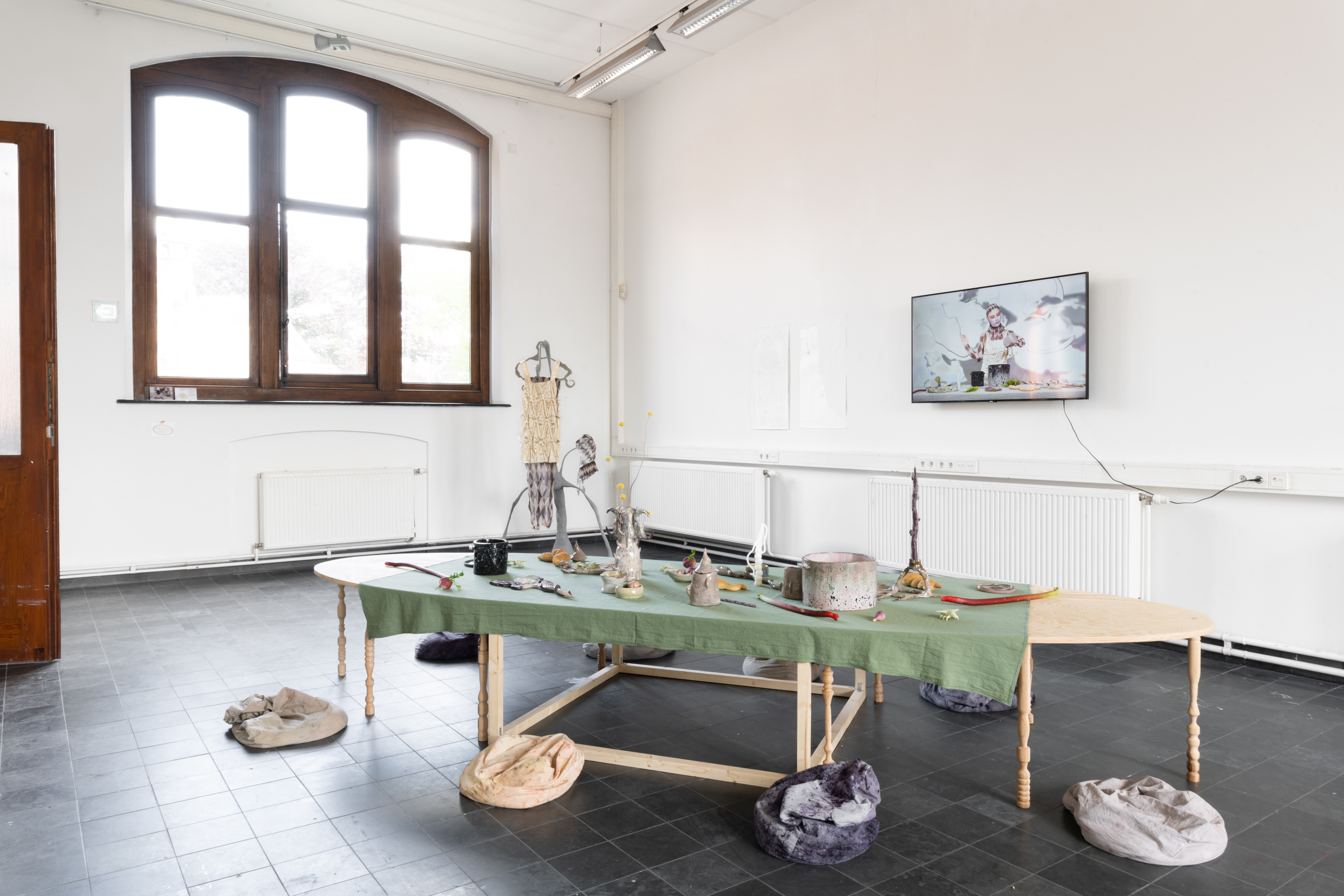
The cookbook challenges traditional societal and institutional norms by redefining authorship and participation. It proposes a shift from the object oriented to the process oriented, from the hierarchical to the horizontal, from the singular artist’s voice to a constellation of kin. The recipes, while often nonculinary, act as metaphors for healing, remembering, and worldbuilding, encouraging participants to rethink how we live and create together.
The installation of The Kinship Cookbook extends this ethos into a spatial form. Using emergent kinships as prototypes for the visualization of the recipes, it invites the audience into a multisensory environment, one that grows, transforms, and responds over time. This world building gesture materializes care and kindness as aesthetic principles, allowing the work to breathe as a living, evolving ecosystem.


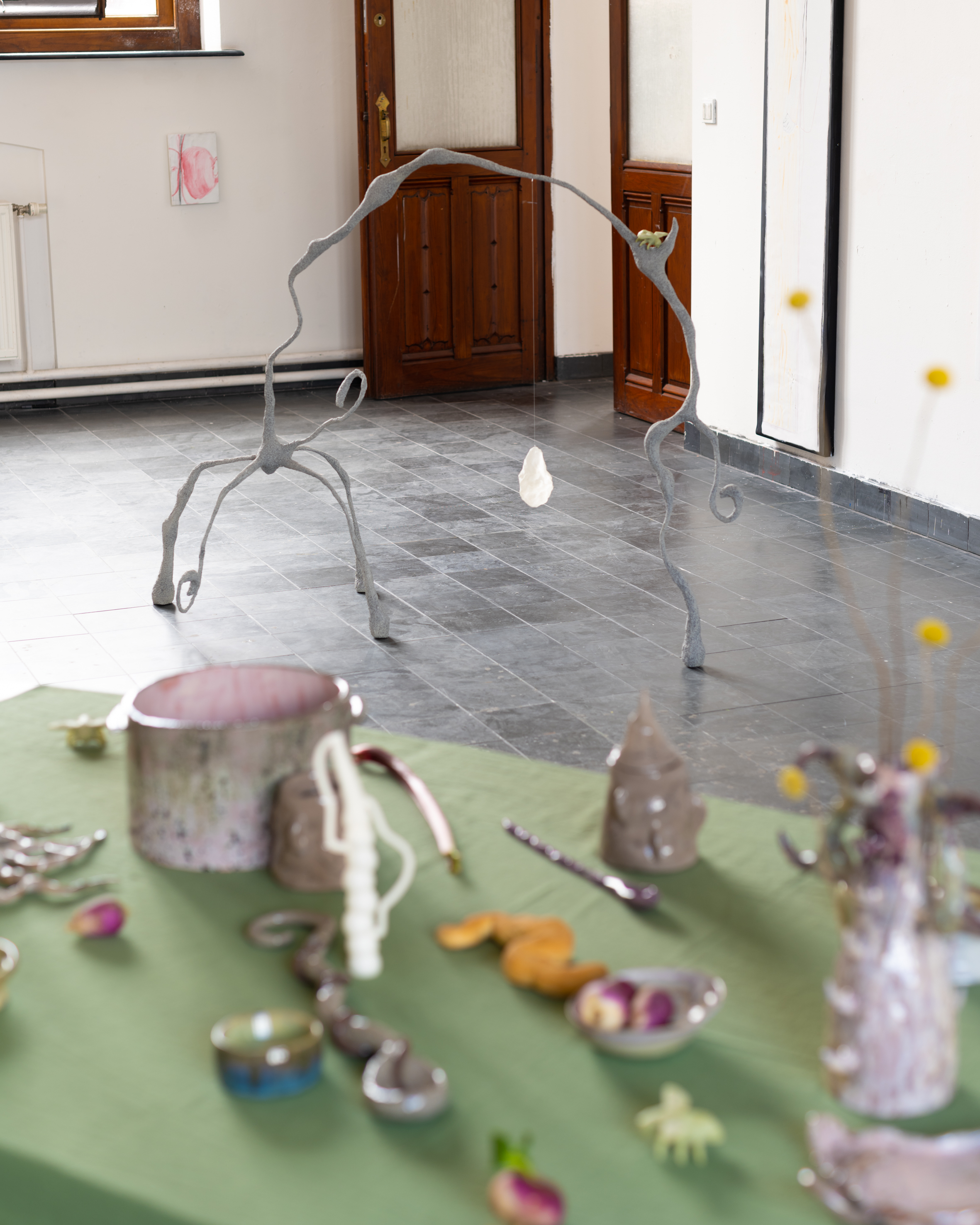
Master project at KASK & Conservatorium, Ghent
Photography credits go to Johan Poezevara
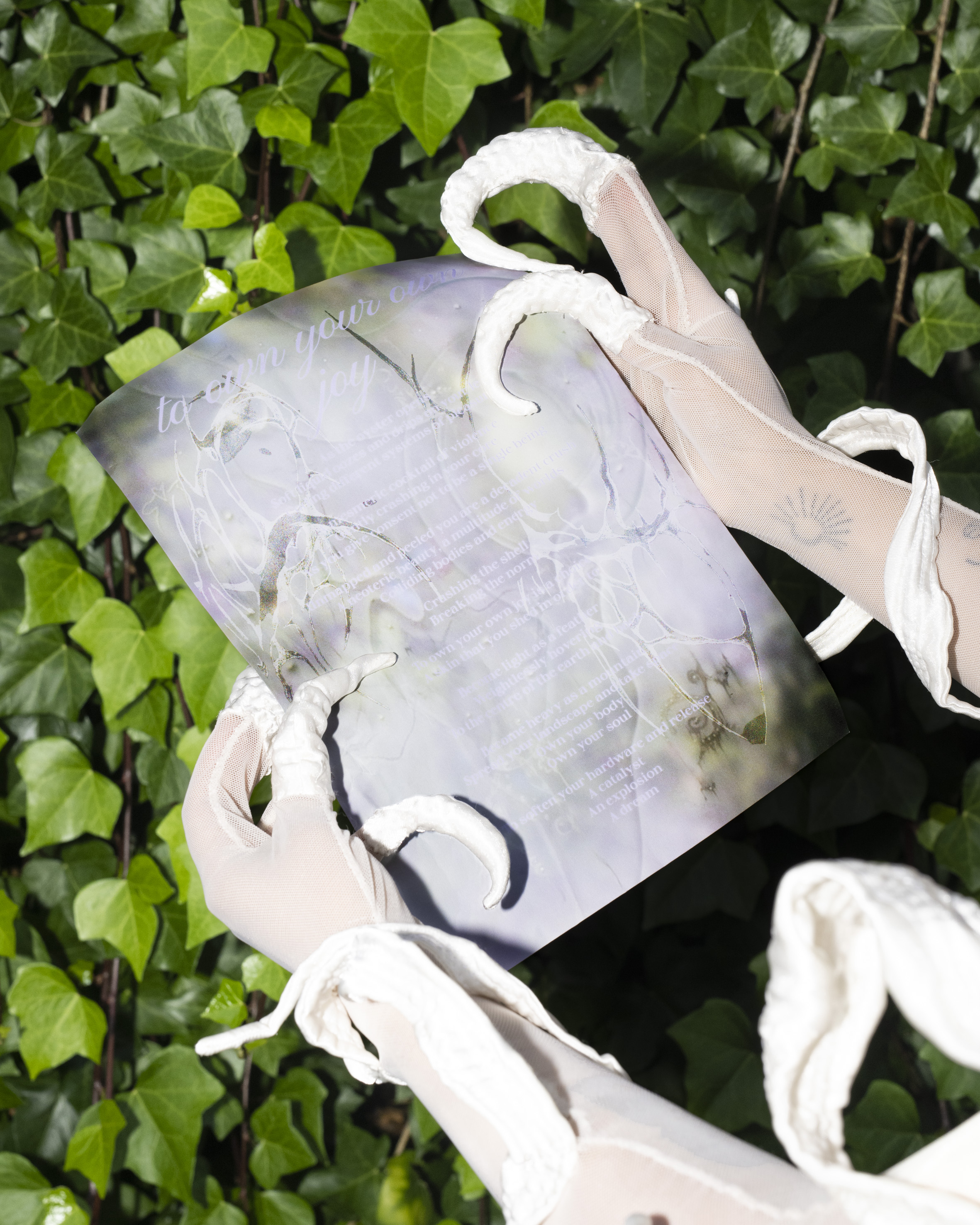
To Own Your Own Joy
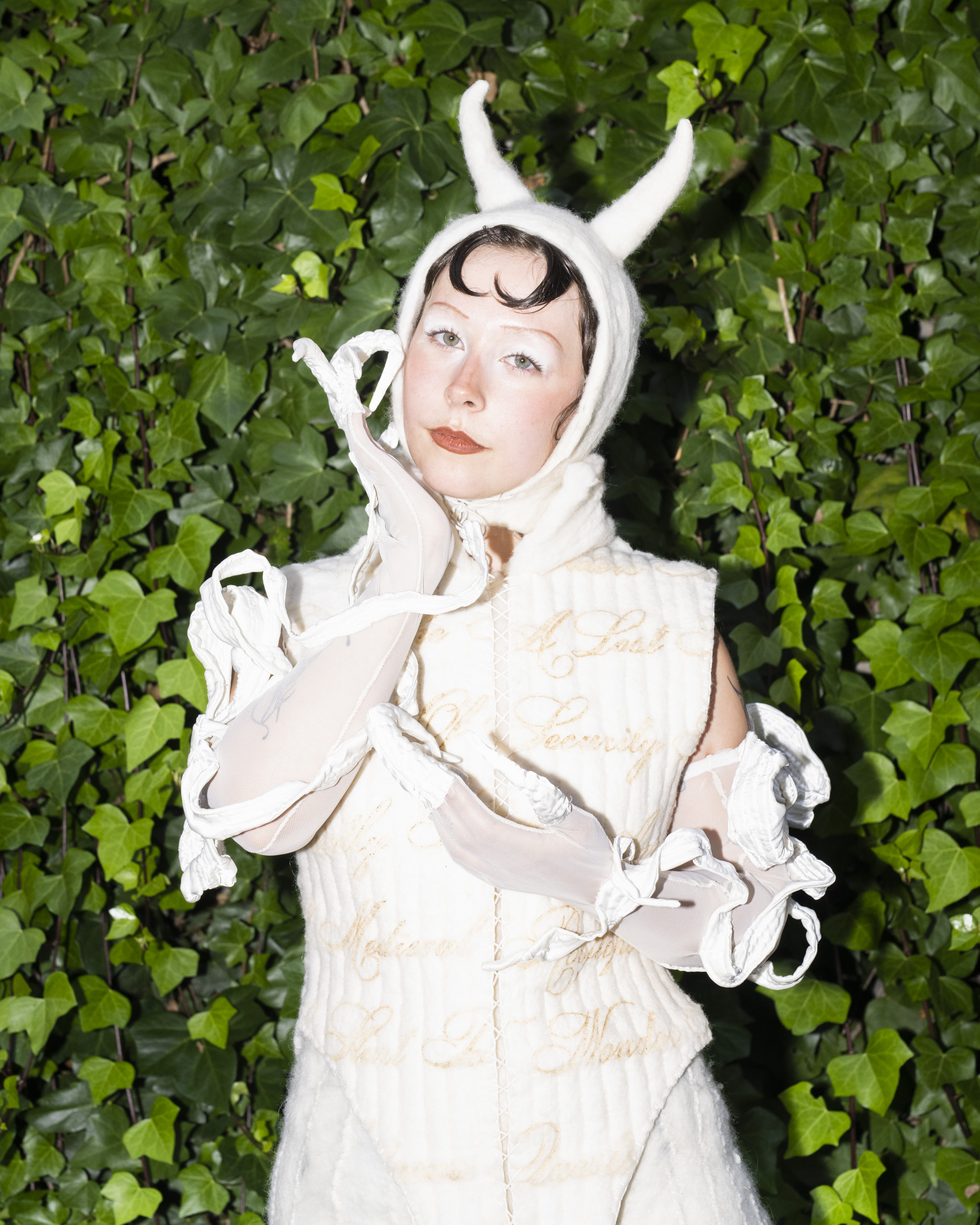
A mysterious white figure stares into a mirror. Sharp white fangs, clinging around a poem. A tail—reminiscent of that of a horse—wagging slowly, as they delicately step throughout the space.
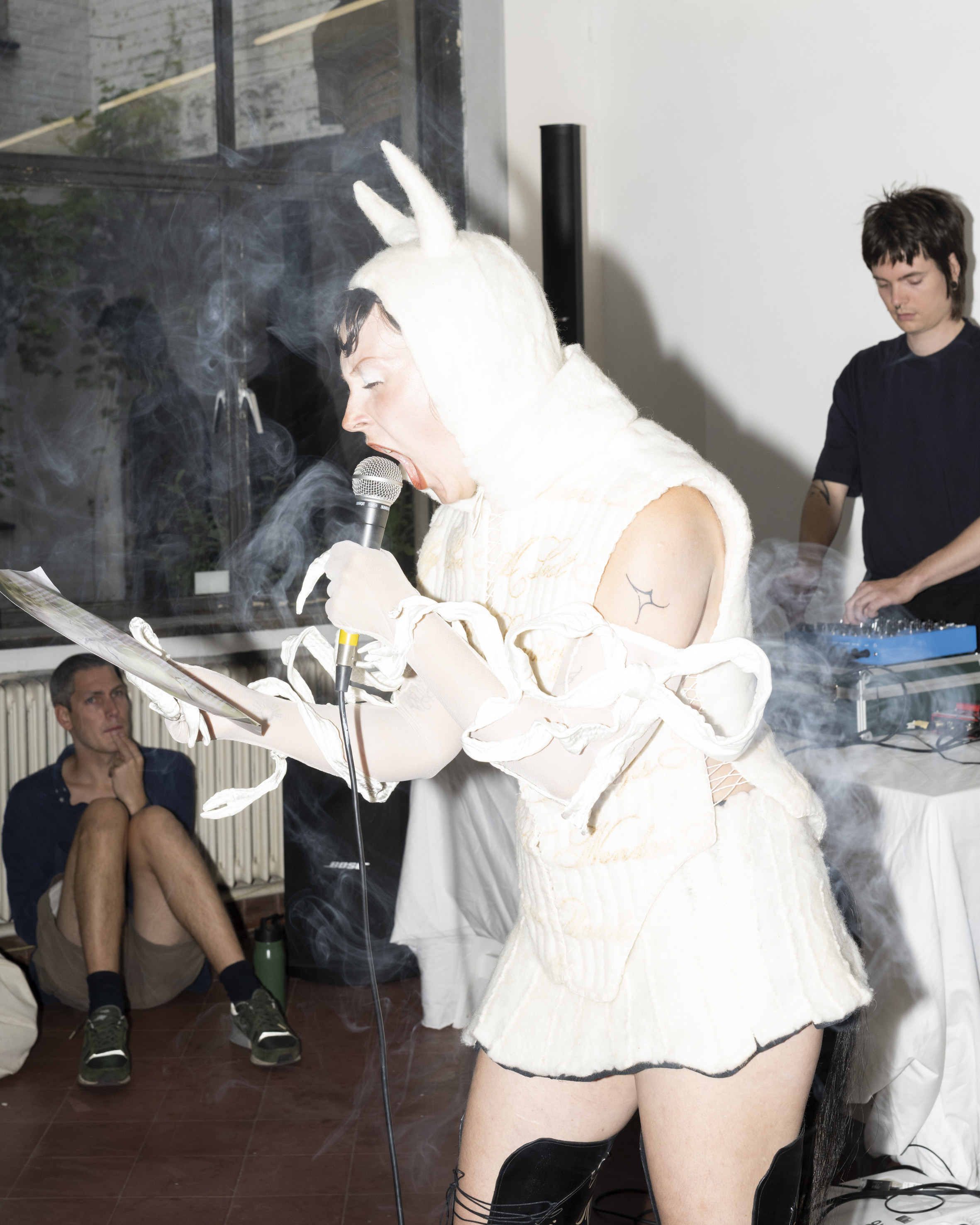
In the performance ‘To Own Your Joy’, Natalija Gucheva recites a self-written poem, accompanied by the sound of Benjamin Schoones. In an altered—deeply harmonised—voice their words sharply fill the room:
“As the oyster opens
Soft liquid oozes and drips on your legs
Coding different systems of pleasure”
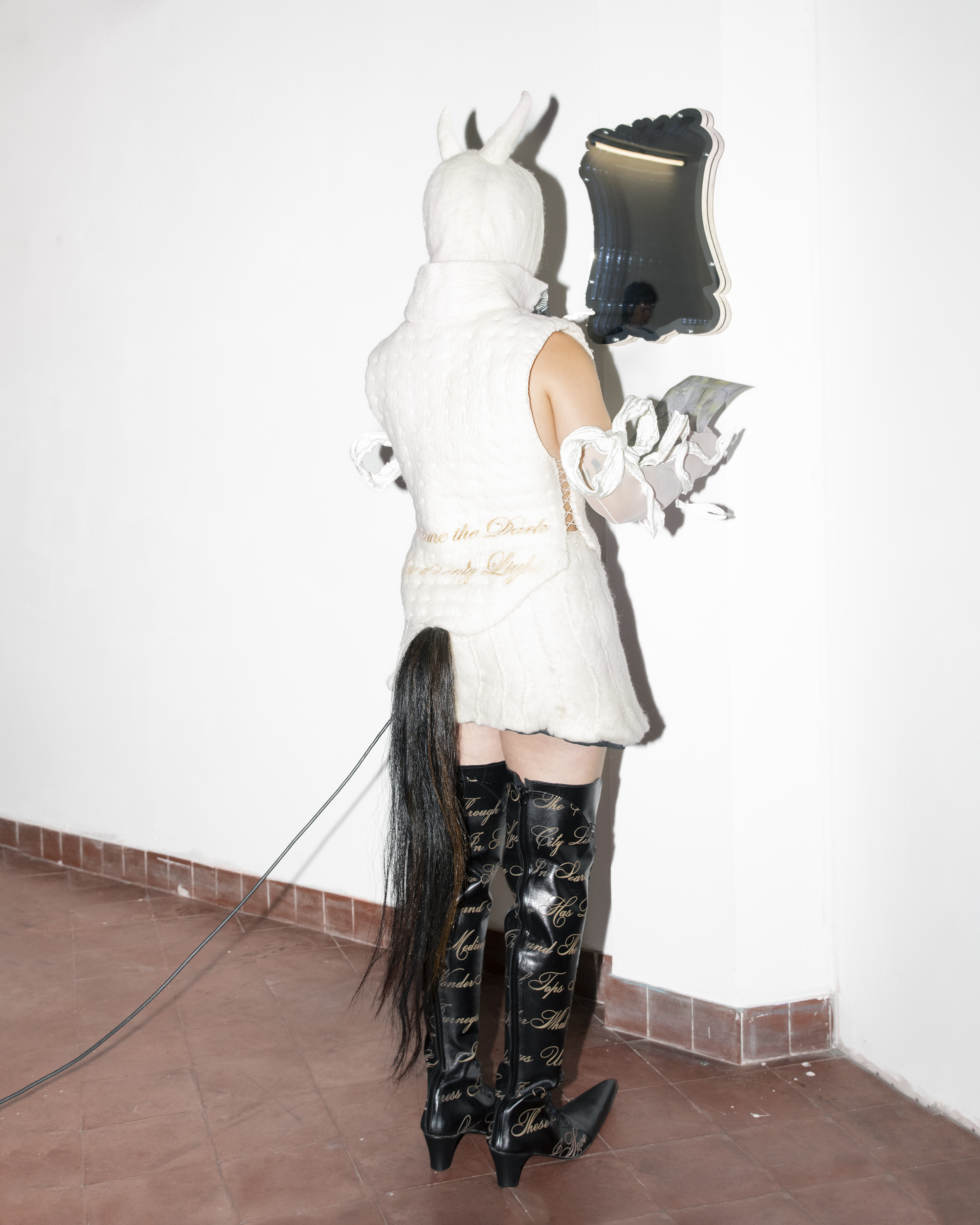
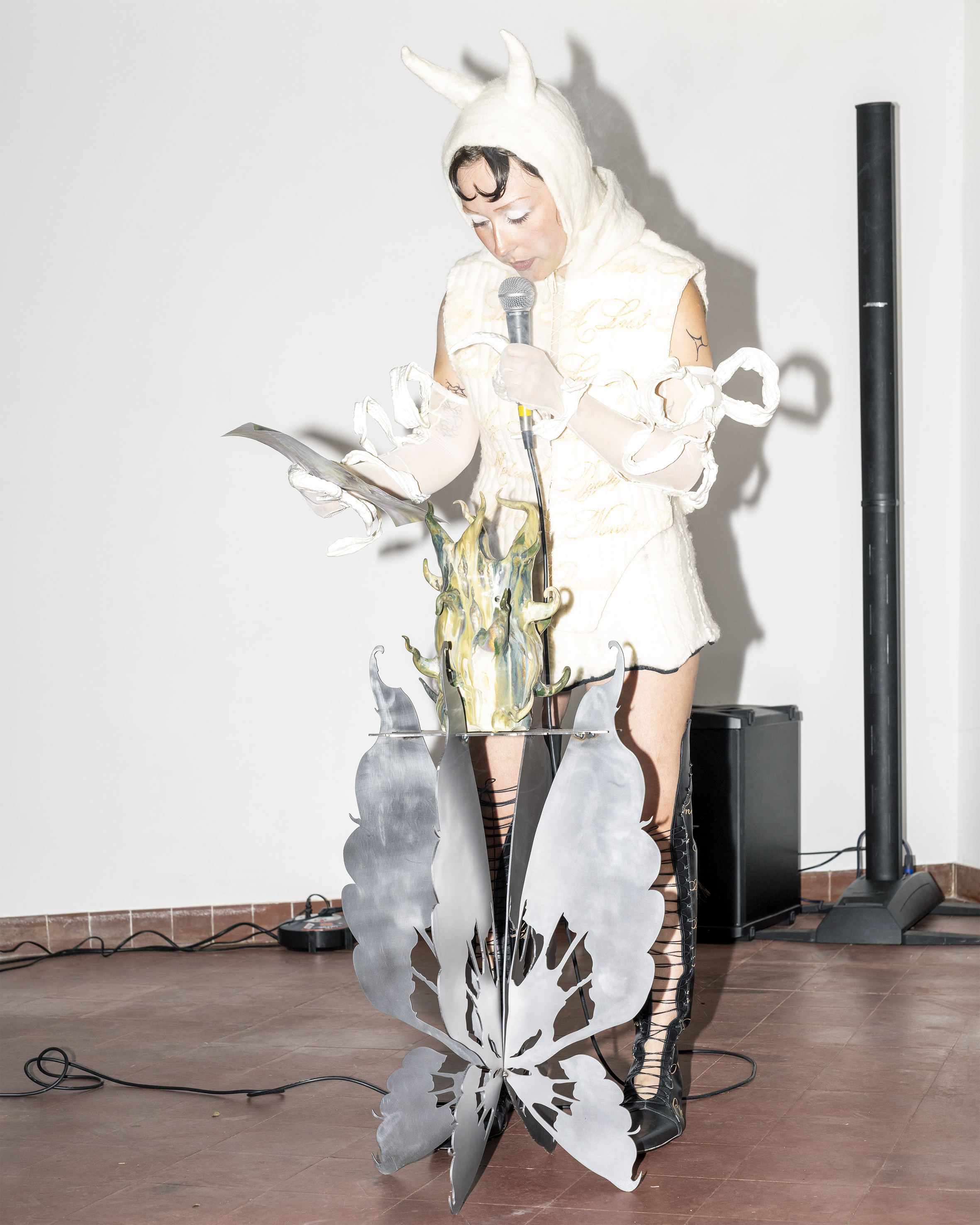
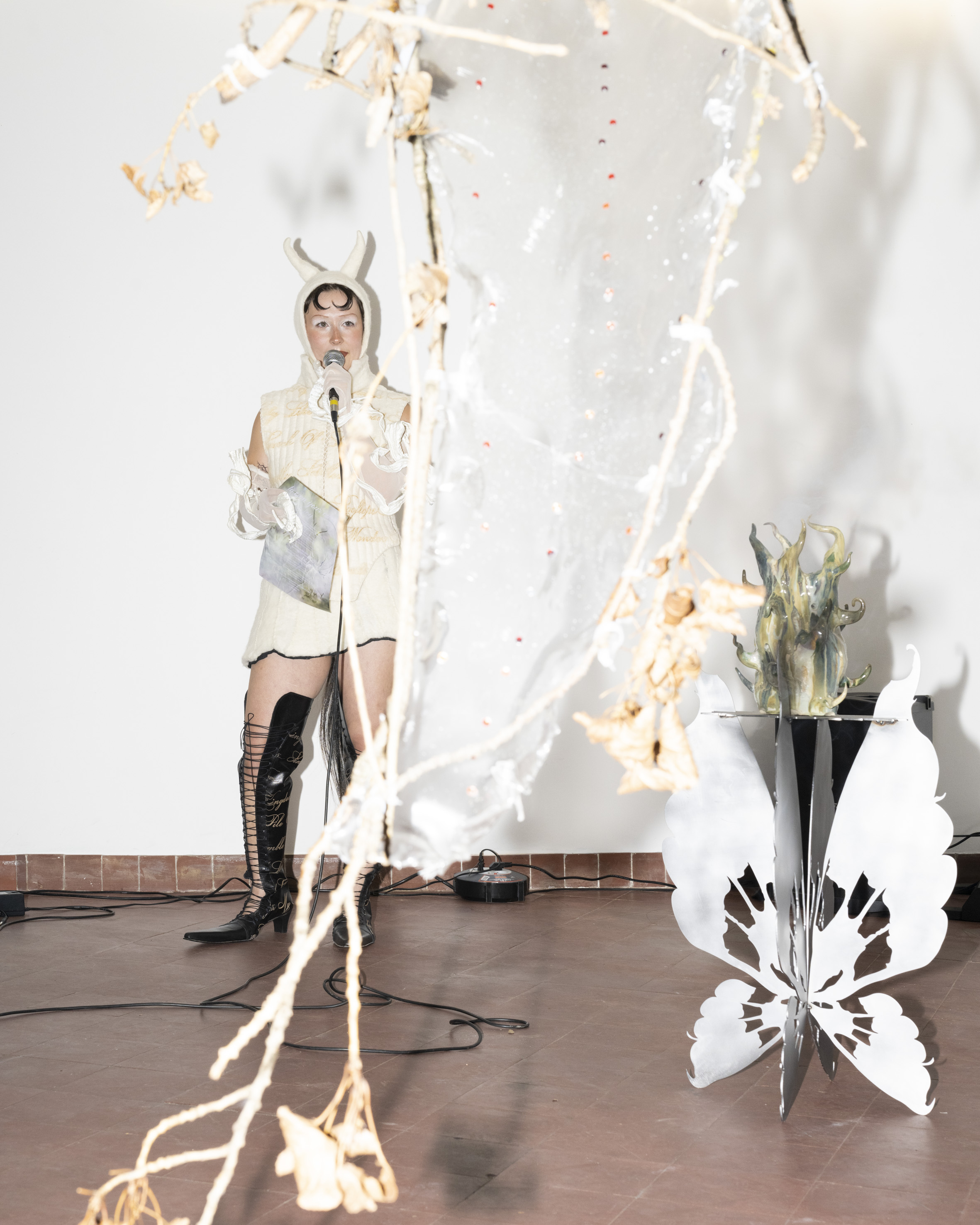
In their writing, Natalija found inspiration in Goblin Market by Christina Rossetti. The Victorian poem explores themes of temptation and sisterhood. The relationship between its two main characters is interpreted as same-sex desire and becomes fertile soil for their own expression to spring from. They expand upon this, voicing their personal truth on gender and sexuality, and the freedom entailed within. Being confronted with the pressure to conform to heteronormative societal norms is a daily practice for queer individuals, to which the artist finds an escape, even if it is temporary. Weaving together garments—by Alexis Gerlach and Aidan Abnet—Natalija searches for identity. A tail, claws, horns. Animalistic elements in their costume can be perceived as a symbol of the constant mutation and code-switching that queer individuals go through. Yet at the same time, they might resemble the monstrosity that society perceives them as. However, as powerfully demonstrated in the performance, these can also be claimed and used as a means to voice anger. To fight back:
“To claw out of our monstrous bodies
Burn the cocoon and lick the ashes
Spit in the face of terror
As a final lullaby”
In a similar notion to the original poem by Rossetti, the norms of the venue become subverted. Natalija’s personal truth on gender and sexuality momentarily intruded the space, as a loud scream unleashes:
“I OWN MY OWN JOY”
Text by Sjoerd Beijers
Music Production
Benjamin Schoones
Costume Design
Alexis Gerlach & Aidan Abnet
Photography credits go to Johan Poezevara
celestial furnace: sentient vessels
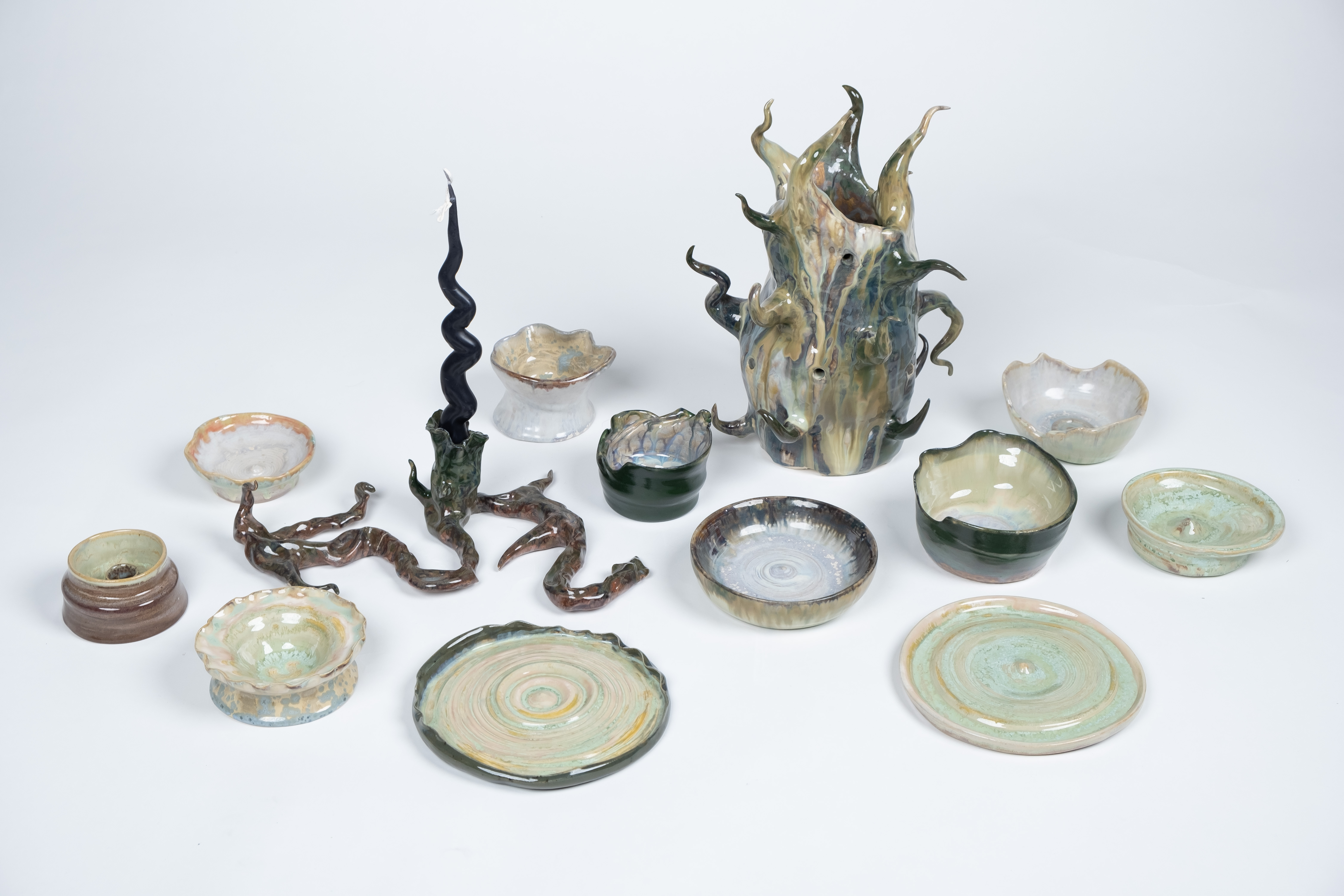
This collection is a material study into the food container as a versatile object, which in its peculiarity offers new way of looking at serving and overall use. The objects, whose colors are deeply inspired by shapes and textures in nature, celebrate the equilibrium between human and non-human — opening a portal for envisioning new narratives for emerging rituals.